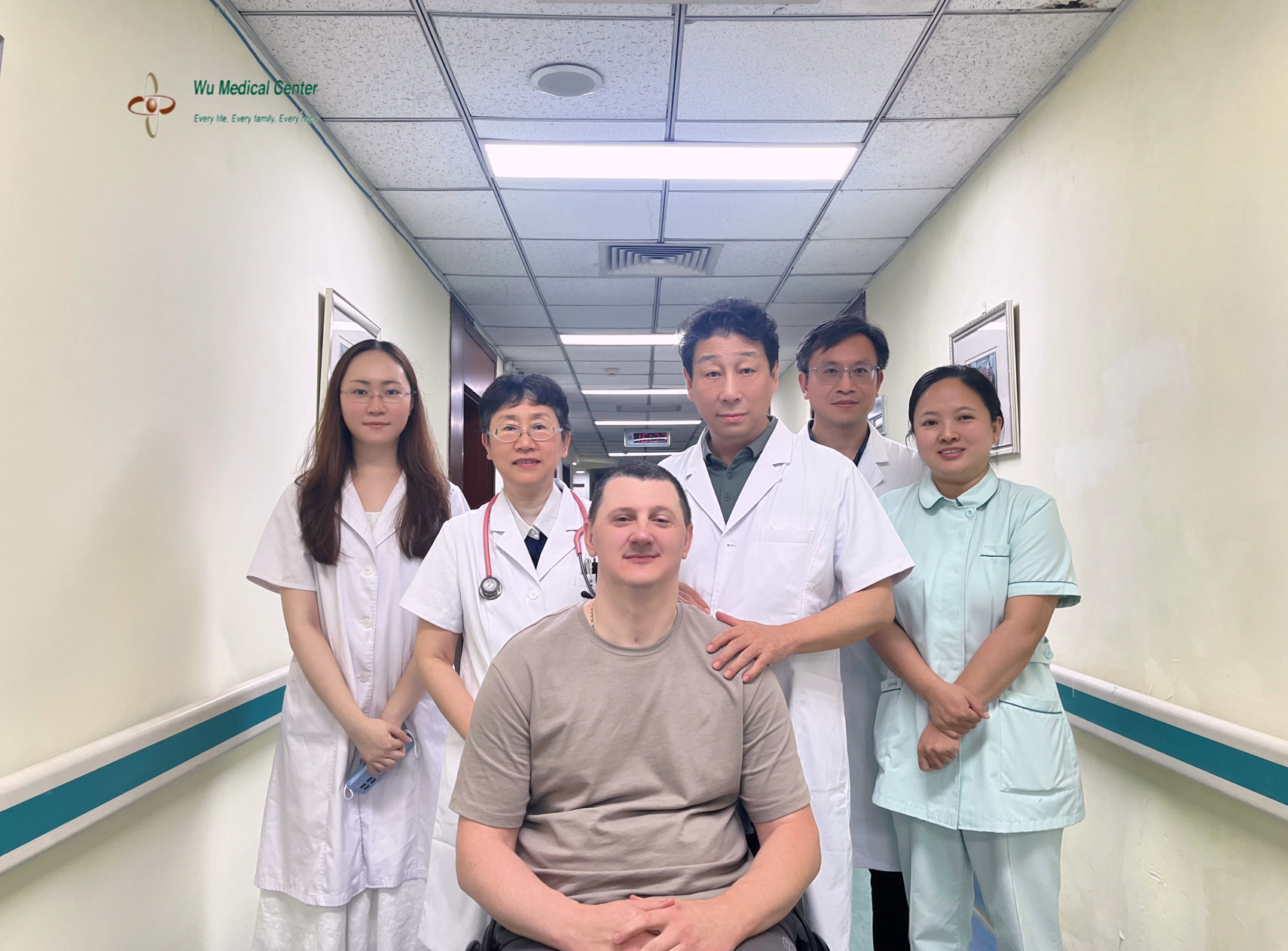
Ihar Kalcheuski-Sequelae of Spinal Cord Injury-(Belarus)
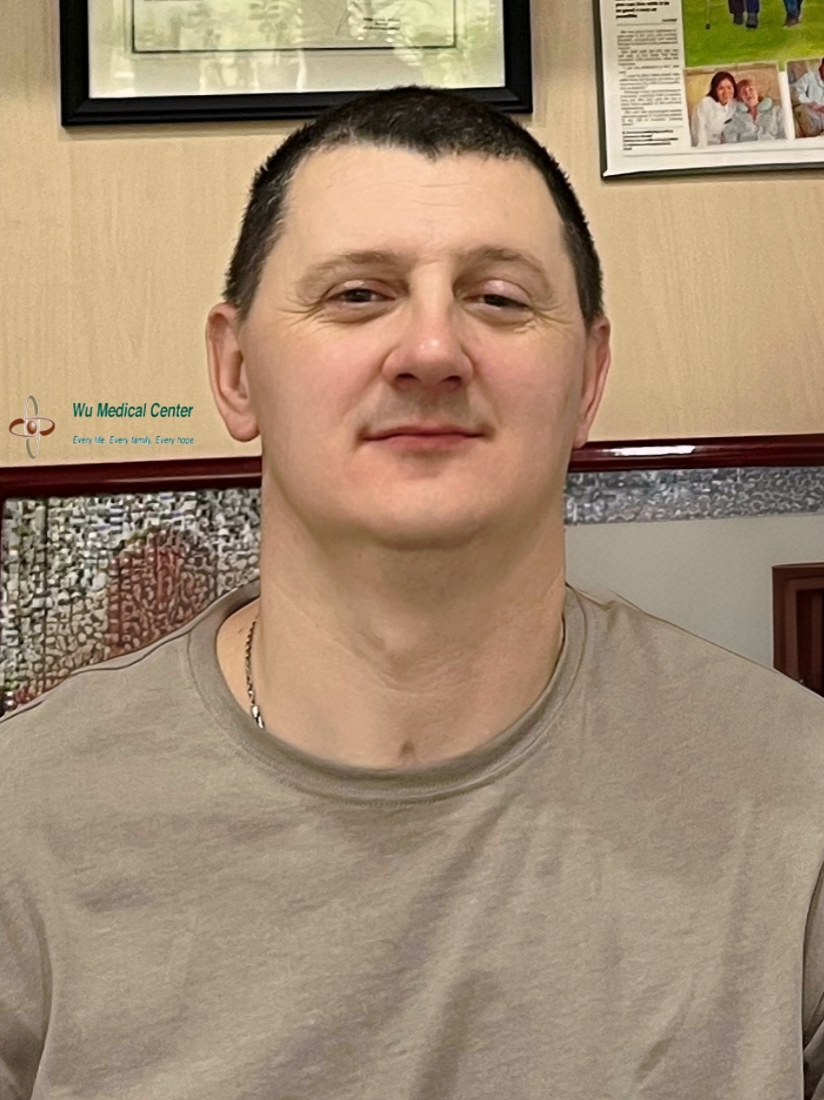 Patient Name: Ihar Kalcheuski
Gender: Male
Age: 41 years old
Nationality: Belarus
Diagnosis: Sequelae of Spinal Cord Injury
Before Treatment:
The patient was admitted with the diagnosis of sequelae of spinal cord injury, presenting with motor and sensory disorders of the limbs for more than 4 years following trauma. He had no history of chronic diseases such as diabetes mellitus, hypertension or coronary heart disease; no history of infectious diseases including hepatitis and tuberculosis, and no history of drug allergy.
Admission Physical Examination:
The patient's blood pressure was 129/89 mmHg, heart rate 72 beats per minute, respiratory rate 18 breaths per minute, body temperature 36.3°C, height 192 cm and body weight 92 kg. He was well-nourished. Bilateral lung breath sounds were clear without rales. Heart sounds were strong and regular, with no murmurs over each valvular area. The abdomen was flat and soft, and the liver and spleen were not enlarged. Significant edema was observed in the bilateral lower legs and dorsa of feet.
Neurological Examination:
The patient was conscious and fluent in speech, with normal memory, calculation and orientation. Cranial nerve examination revealed no abnormalities. His neck was supple, with fair strength for neck rotation and shoulder shrugging. Muscle strength of bilateral upper limbs was Grade 5. Muscle strength of lumbodorsal muscles was Grade 1. Muscle strength of bilateral lower limbs and feet was Grade 0. Muscle tone of bilateral upper limbs was roughly normal, while muscle tone of bilateral lower limbs was elevated. Mild muscular atrophy was seen in bilateral lower limbs. Tendon reflexes of bilateral upper limbs were basically normal. Tendon reflexes of bilateral lower limbs were hyperactive with mild associated reactions. Clonus was present in bilateral lower limbs, which could be easily elicited during passive movement of both legs. Superficial and deep sensation below the bilateral T7-T8 dermatomes was diminished, most prominently in the feet. Only upper abdominal reflexes could be elicited bilaterally, while middle and lower abdominal reflexes were absent. Pathological signs were negative in bilateral upper limbs and weakly positive in bilateral lower limbs. Bilateral finger-to-nose test, finger opposition test and alternating movement test were completed satisfactorily. Coordination examination of bilateral lower limbs could not be performed due to impaired muscle strength. Meningeal irritation signs were negative.
Treatment Course:
The patient was clearly diagnosed with sequelae of spinal cord injury upon admission. He received spinal nerve repair therapy with neural stem cells and mesenchymal stem cells. Adjuvant CAST therapy was administered to improve circulation, nourish nerves and regulate immunity, together with comprehensive rehabilitation therapy.
After Treatment:
The patient’s motor function is improved. Muscle strength of lumbodorsal muscles is increased to Grade 2. Muscle strength of bilateral lower limbs and feet is reached Grade 1+. He achieves rudimentary two-point support capability; muscle contraction and slight limb movement can be observed during exertion, and knee joint elevation off the bed can be triggered by stimulation. Clonus of bilateral lower limbs is markedly alleviated; limb associated reactions are significantly reduced. Edema of bilateral lower limbs nearly is resolved. Bilateral upper, middle and lower abdominal reflexes are all elicitable. The level of impaired superficial sensation is descended to the T10 dermatome. Pain sensation score is reached 8–9 points at the T10 level and 6–7 points at the T11–T12 level. The sensitivity of superficial and deep sensation is improved compared with baseline.