Khawaja Muhammad Usman-Cerebral palsy, Developmental dysplasia of joints-(Pakistan)
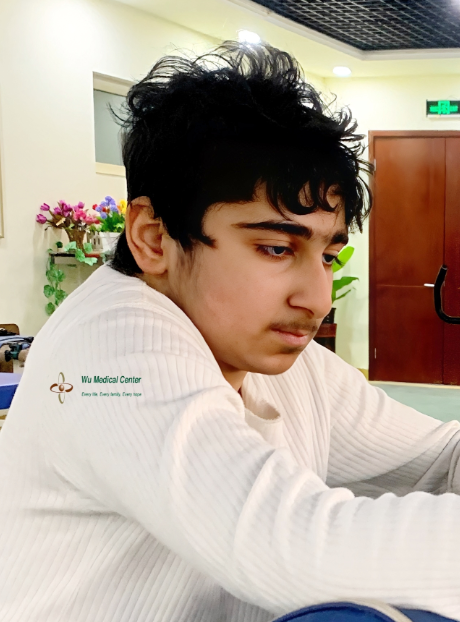 Patient Name: Khawaja Muhammad Usman
Gender: Male
Age: 12 years old
Nationality: Pakistan
Diagnosis: Cerebral palsy, Developmental dysplasia of joints
Before Treatment:
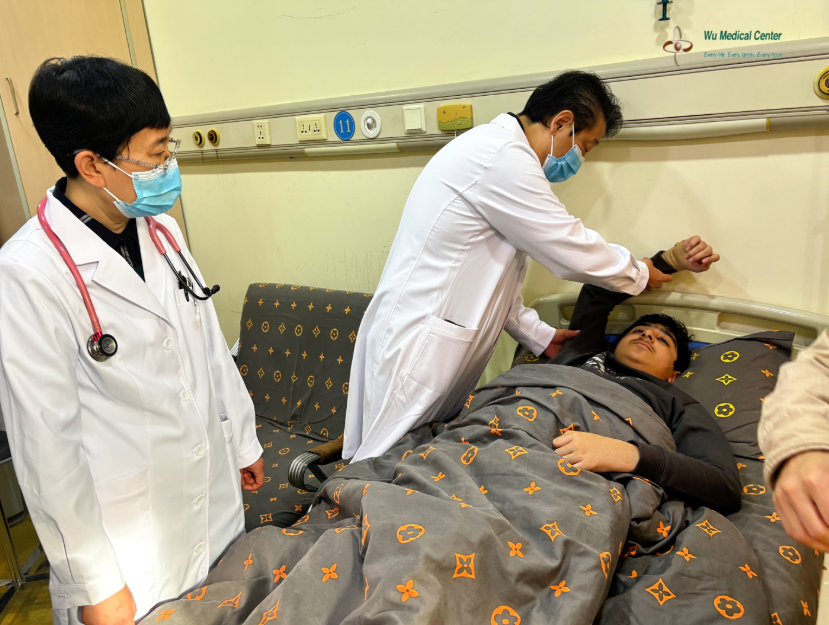
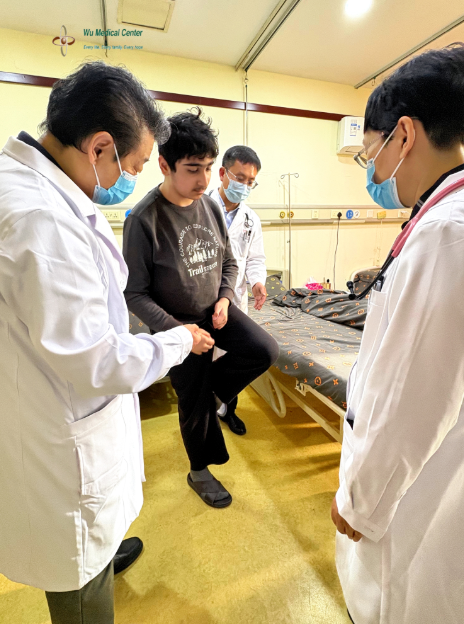
The patient was admitted due to "joint contractures and flexion of the limbs accompanied by pain and limited mobility for 12 years," diagnosed with "spastic cerebral palsy and developmental dysplasia of joints." The patient had severe limitations in shoulder joint mobility, with both elbows flexed at an 80-degree angle and elbow dislocations, accompanied by significant tenderness or stretching pain, more pronounced on the right side. Both hands were flexed, and the fingers could not be straightened. There was limited abduction in both lower limbs, with only a 15-degree angle and bilateral hip joint pain. There was noticeable flexion of the toes, particularly the second toe, with slight tenderness. The patient's walking posture was significantly abnormal, with a narrow base and small strides. He frequently experienced neck and shoulder pain and had difficulty falling asleep. Due to joint pain, he intermittently took pain medication during the day, and his sleep was poor at night due to pain, resulting in low mood and depression; he tended to be uncommunicative and has noticeable constipation.
Admission Physical Examination:
The patient’s blood pressure was 118/75 mmHg, heart rate was 80 beats per minute, height was 168 cm, and weight was 67.5 kg. He had abnormalities in the development of bones, joints, and ligaments, but his nutritional status was good. No jaundice was observed on the skin or mucous membranes, and there were no petechiae or bruising. His lips showed no cyanosis, and there was no congestion in the pharynx. Respiratory sounds were clear bilaterally, with no dry or moist rales detected. Heart sounds were strong, but the rhythm was irregular, with no significant murmurs heard. His abdomen was soft, and there was no obvious edema in the lower extremities. His arms were in a position of passive flexion, with incomplete flexion of the fingers, more pronounced on the right side than the left. He experienced significant pain in both shoulders and upper limbs, rated at approximately 7-9 out of 10. There was limited range of motion in both lower limbs, accompanied by pain.
Neurological Examination:
The patient was alert and speaks fluently. His memory, calculation ability, and orientation were normal. Eye movements in all directions were flexible, with both pupils equal and round, measuring 3 mm in diameter, and responsive to light, with no nystagmus observed. The forehead wrinkles and nasolabial folds were symmetrical, and tongue protrusion was midline. Muscle tone in the limbs was significantly increased, with muscle strength rated at 4+ out of 5. Deep tendon reflexes in both upper limbs were generally normal, while the reflexes in both lower limbs were diminished (due to tendon contractures and limited joint mobility). Coordination was essentially normal. There were suspicious positive signs for pathological reflexes in both lower limbs. Signs of meningeal irritation were negative.
Treatment Process:
Upon admission, the patient's diagnosis of "spastic cerebral palsy and developmental dysplasia of joints" was confirmed. He received CAST treatment alongside a combined therapy of neural stem cells and mesenchymal stem cells. This approach aimed to repair brain nerve damage, nourish the brain nerves, improve circulation, regulate the immune system, and provide comprehensive rehabilitation.
Post-Treatment:
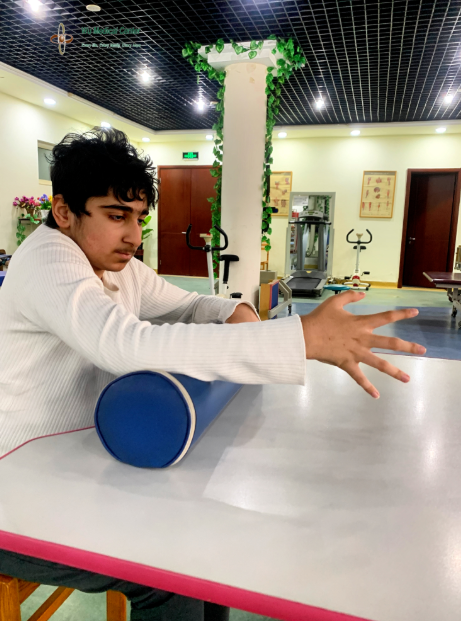
The patient's condition has significantly improved compared to admission. The range of motion in all four limb joints has increased, and his movements are noticeably more flexible. He can now easily reach the back of his head with both hands, and his hand extension and flexion are much more agile, with a marked reduction in stiffness. Both elbow joints can be opened to approximately a 135-degree angle, and the range of motion in both hip joints has increased. His walking stride has lengthened, and his gait base has widened compared to admission, resulting in enhanced stability while walking. The abduction of both lower limbs can now reach about 40 degrees. The pain in his head, neck, shoulders, and all limb joints has significantly decreased, and he currently reports no pain during daily activities. Additionally, his constipation has improved markedly. Overall, his energy levels and physical stamina have also enhanced.