Sylvia Pace-Motor Neuron Disease (MND)-(Malta)
 Patient Name: Sylvia Pace
Gender: Female
Age: 62 years old
Nationality: Malta
Diagnosis: Motor Neuron Disease
Admission Status:
The patient was admitted with the diagnosis of "Motor Neuron Disease", presenting with the chief complaint of "progressive limb weakness and muscle atrophy for 3 years, aggravated with dyspnea for 3 months". Three years ago, the patient developed left arm muscle weakness accompanied by fasciculations without obvious inducement. She was suspected of having "carpal tunnel syndrome" and underwent surgical treatment. After the operation, her condition did not alleviate but gradually worsened. At present, she had difficulty elevating both upper limbs, more severe on the left side, and could not grasp objects with her left hand. She could not stand independently; she could stand up with difficulty with assistance. She had obvious foot drop in both lower extremities and needed to wear an ankle-foot orthosis. Her assisted walking distance had shortened, and she could walk slowly for 5 meters with assistance. Her voice was weakened with occasional dysphagia. She experienced dyspnea in the supine position and required semi-recumbent position with non-invasive ventilator support. She was prone to general fatigue, accompanied by muscle atrophy and joint pain. Past medical history: She has had hypertension for half a year and is allergic to Captopril. She is currently taking Riluzole, Coenzyme Q10, Fluvoxamine Maleate, Quetiapine Tablets, Valsartan and other medications.
Admission Physical Examination:
The patient's heart rate was 85 beats per minute, respiratory rate 30 breaths per minute, blood pressure 145/98 mmHg, and blood oxygen saturation 93%. She was well-developed with fair nutrition. Mild cyanosis of the lips was noted. The pharyngeal mucosa showed old dark red discoloration. Thoracic respiratory excursion was decreased; breath sounds in bilateral lower lungs were faint, without obvious dry or moist rales. Heart sounds were weak, and no obvious murmurs were heard at each cardiac valve area. The abdomen was flat, without tenderness or rebound tenderness; the liver and spleen were not palpable below the costal margin. Pitting edema was observed in the anterior tibia at the distal one-third of both lower limbs, with palpable dorsalis pedis artery pulses.
Neurological Examination:
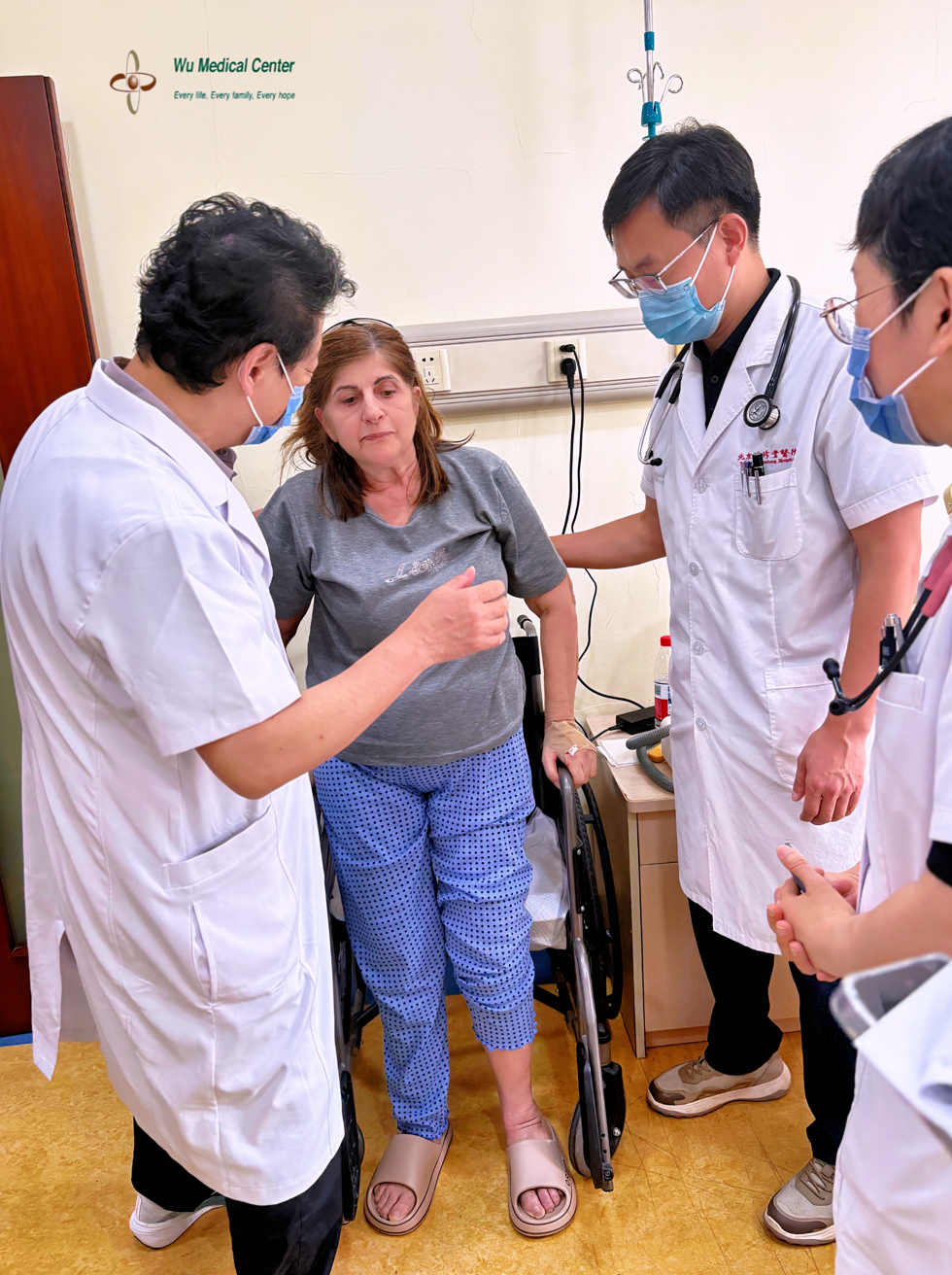
The patient was conscious and in fair mental status. Her articulation was impaired with slightly weak phonation. Calculation, memory and orientation were all normal. Pupils were 3 mm bilaterally with brisk light reflex; ocular movements were full in all directions, no nystagmus. Bilateral nasolabial folds and forehead wrinkles were symmetric. Palatal elevation was weakened. Tongue protruded in the midline, tongue mobility decreased, with mild tongue atrophy and fasciculations. Masticatory strength was acceptable. Neck rotation and shoulder shrug strength were slightly reduced (Grade 4). Left biceps brachii muscle strength Grade 2+, triceps brachii muscle strength Grade 2+, wrist extensor strength Grade 0 (positive wrist drop sign), grip strength Grade 1+, interphalangeal flexor strength Grade 1 (inability to oppose fingers). Right upper limb proximal muscle strength Grade 3+, grip strength Grade 4. Left lower limb proximal muscle strength Grade 3-, distal strength: dorsiflexion Grade 1 / plantar flexion Grade 2. Right lower limb proximal muscle strength Grade 2+, distal strength: dorsiflexion Grade 2 / plantar flexion Grade 2. Muscle tone was normal. Muscle atrophy was present in all four limbs, most prominent in the thenar, hypothenar and interosseous muscles of the left hand. Superficial and deep sensation was intact. Tendon reflexes of all limbs were diminished. Left Hoffman sign and Babinski sign were positive. Meningeal irritation signs were negative.
Treatment Course:
The patient was definitely diagnosed with Motor Neuron Disease upon admission. She received neural stem cells to repair motor nerve injury, and mesenchymal stem cells for neurotrophic, endocrine and immune support. Adjuvant medications including Edaravone, Riluzole, neurotrophic factors, reduced glutathione were administered as CAST therapy, combined with comprehensive rehabilitation therapy.
Post-treatment Condition:
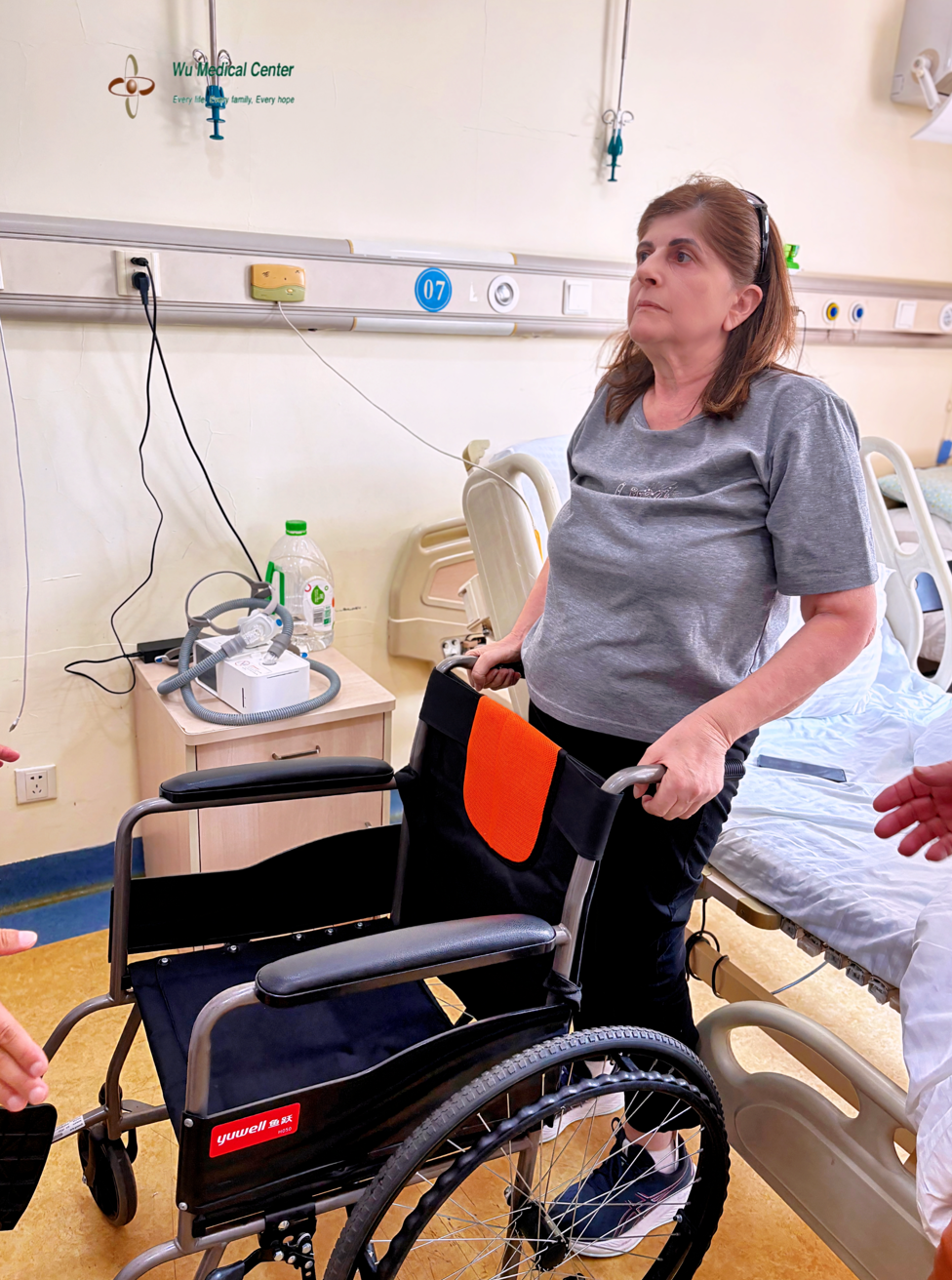
The patient's motor function is improved with increased muscle strength. In the sitting position, her left upper arm can be lifted to the top of the head more easily. The middle and ring fingers of her left hand can oppose the thumb; obvious palmar flexion of the index and little fingers appears and is relatively effortless. Finger dexterity and grip strength are improved. Muscle strength and weight-bearing capacity of the right upper limb is increased. Muscle bulk of the right thenar eminence is fuller than before, and the right grip strength is Grade 5, nearly normal. She can complete sit-to-stand independently, and walk 20 meters with a walker. Foot dragging is not obvious and she can turn slowly. Neck rotation and shoulder shrug strength remains slightly weak (Grade 5-). Left biceps brachii muscle strength Grade 3+, triceps brachii muscle strength Grade 3+, wrist extensor strength Grade 1+, grip strength Grade 3+, interphalangeal flexor strength Grade 2+. Right upper limb proximal muscle strength Grade 4-, grip strength Grade 5. Left lower limb proximal muscle strength Grade 4-, distal strength: dorsiflexion Grade 2 / plantar flexion Grade 3. Right lower limb proximal muscle strength Grade 3+, distal strength: dorsiflexion Grade 3 / plantar flexion Grade 3. Cardiopulmonary function is improved; breath sounds in the right lung are enhanced compared with previous findings, and blood oxygen saturation can be maintained above 95%. The respiratory rate is about 20–24 breaths per minute at rest. Her energy and physical endurance are enhanced.