Ramona Bianca-Hereditary spastic paraplegia-(Australian)
 Name: Ramona Bianca
Gender: Female
Age: 47 years old
Nationality: Australian
Diagnosis: Hereditary spastic paraplegia
Condition on Admission:
The patient was admitted to hospital due to a 9-year history of bilateral lower limb stiffness and unsteady gait, with a confirmed diagnosis of hereditary spastic paraplegia. Nine years ago, she developed unexplained stiffness and weakness in both lower limbs, and was diagnosed with the disease at a local hospital. She underwent stem cell therapy in Thailand previously, but achieved no obvious therapeutic effect, and her condition continued to progress. Currently, the muscle strength of her upper limbs was basically normal. She presented with bilateral lower limb stiffness, poor balance, decreased muscle strength, as well as reduced physical stamina and endurance. Obvious pain was felt in the right back, hip and knee joints. She had suffered from hypertension and postural orthostatic tachycardia syndrome for 5 years. Examinations showed moderate bilateral renal artery stenosis accompanied by elevated blood aldosterone and bilateral renal cysts. She also had a 4-year medical history of ankylosing spondylitis and arthritis. At present, she was taking hydralazine, verapamil, multivitamins, coenzyme Q10 and other medications.
Physical Examination on Admission:
The patient’s respiratory rate was 20 breaths per minute; supine blood pressure was 109/77 mmHg with a heart rate of 69 beats per minute; standing blood pressure was 102/78 mmHg with a heart rate of 91 beats per minute. She was well-developed and of normal body build. There was no obvious cyanosis of the lips, and the pharynx was non-erythematous. Breath sounds were clear bilaterally, with no rales or rhonchi. Heart sounds were strong and regular, with no murmurs in any valvular area. The abdomen was flat and soft; the liver and spleen were not palpable below the costal margin. There was no edema in either lower limb.
Neurological Examination:
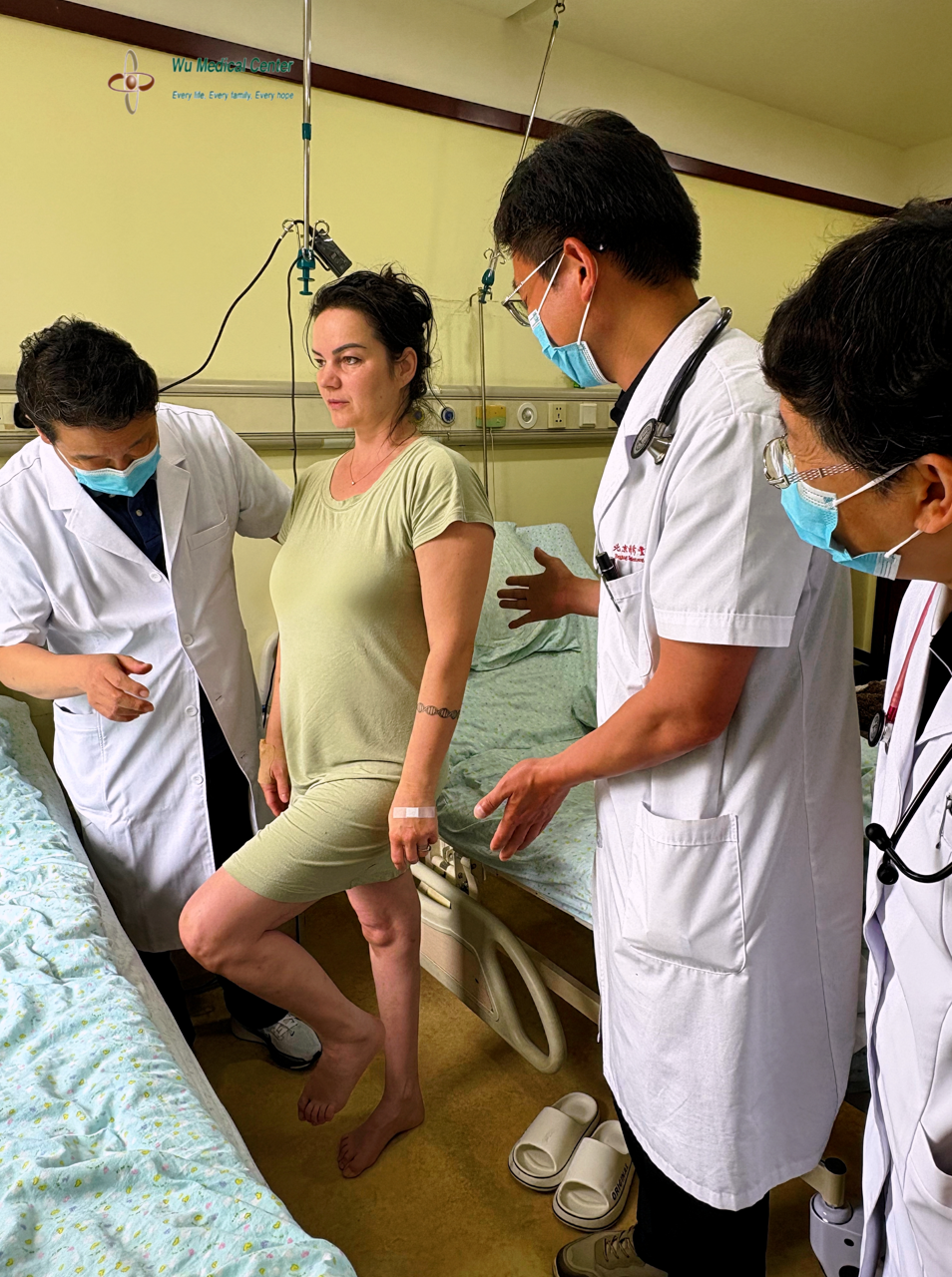
The patient was alert and oriented, though anxious. Her calculation, memory, and orientation were essentially normal. Pupils were 3 mm in diameter bilaterally. Nasolabial folds and forehead wrinkles were symmetric. The tongue was midline, with no obvious atrophy and normal mobility. Buccal expansion and mastication strength were intact. There was no significant dysphagia or choking on water. Soft palate elevation was adequate bilaterally, and the gag reflex was normal. Neck rotation and shoulder shrug strength were grade 5 bilaterally. Upper limb strength was grade 5 bilaterally; lower limb strength was grade 4-. Balance was impaired, with reduced range of motion and marked stiffness in the lower limbs. She had difficulty standing independently, could not stand on one leg, and could not stand with eyes closed. Ambulation required assistance and a cane, with short steps and a wide base. Sensation was intact in all four limbs. Upper limb tone was normal; lower limb tone was mildly increased. Upper limb tendon reflexes were slightly diminished; lower limb tendon reflexes were brisk. Pathological reflexes were absent bilaterally. Finger-to-nose, rapid alternating, and finger-to-finger tests were performed adequately. Heel-to-shin testing was unsteady and inaccurate. Meningeal signs were negative.
Treatment Process:
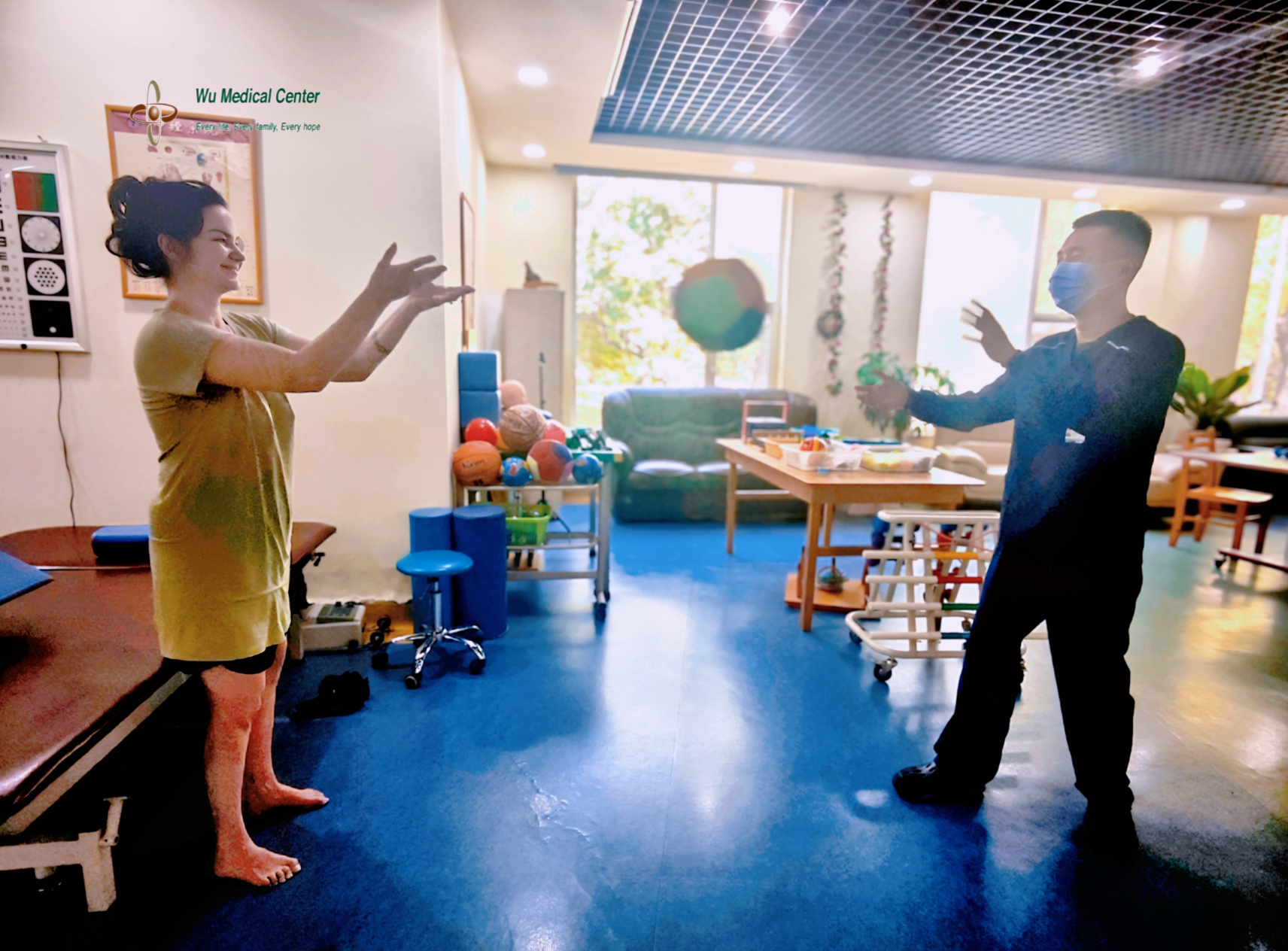
The patient was definitely diagnosed with hereditary spastic paraplegia upon admission. During hospitalization, neural stem cells were administered to repair nerve damage, and mesenchymal stem cells were used to support neural nutrition, endocrine function and immune regulation. Adjuvant CAST therapy was conducted with neurotrophic factors, monosialotetrahexosylganglioside and reduced glutathione, combined with comprehensive rehabilitation therapy.
Post-Treatment Outcome:
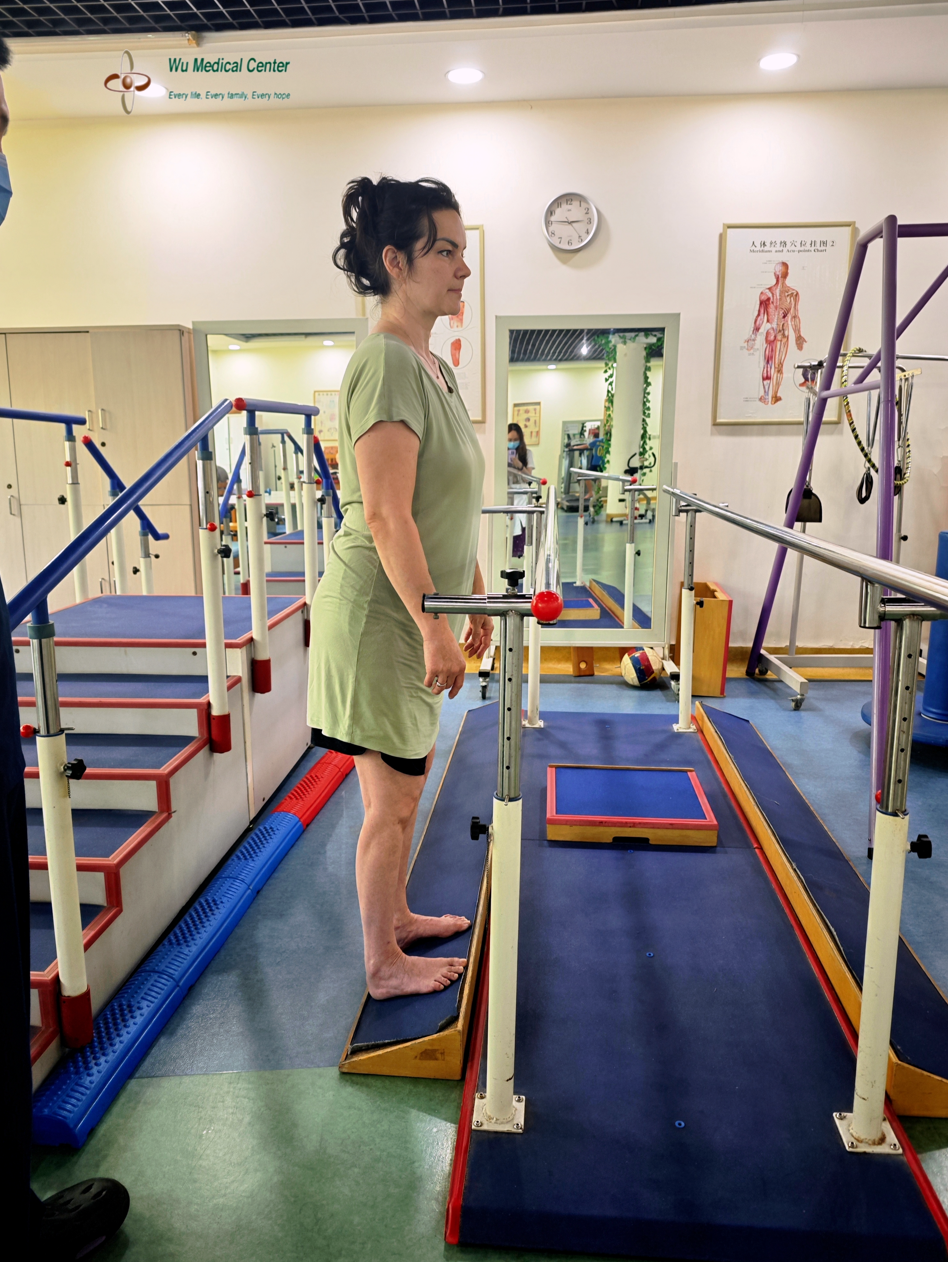
The patient achieves remarkable improvements in motor function and balance. Stiffness of both lower limbs is relieved, and the muscle strength of lower limbs recovers to Grade 5. She can bend and support herself on both legs for more than 15 seconds, and maintain the posture even under strong external pressure. Pain in the right back, hip and knee joints is substantially alleviated. She feels no pain under normal daily activities, and only experiences hip pain after physical fatigue. Her cardiopulmonary function is improved, with supine and standing heart rate mostly maintained at 60 to 70 beats per minute. Her walking ability, lower limb balance and stability are enhanced. She can sit down and stand up independently, stand on one leg, and keep standing with eyes closed for a short period. Her walking distance is increased significantly, with longer steps and a narrower stance base. Her mental state also is improved and anxiety is eased.