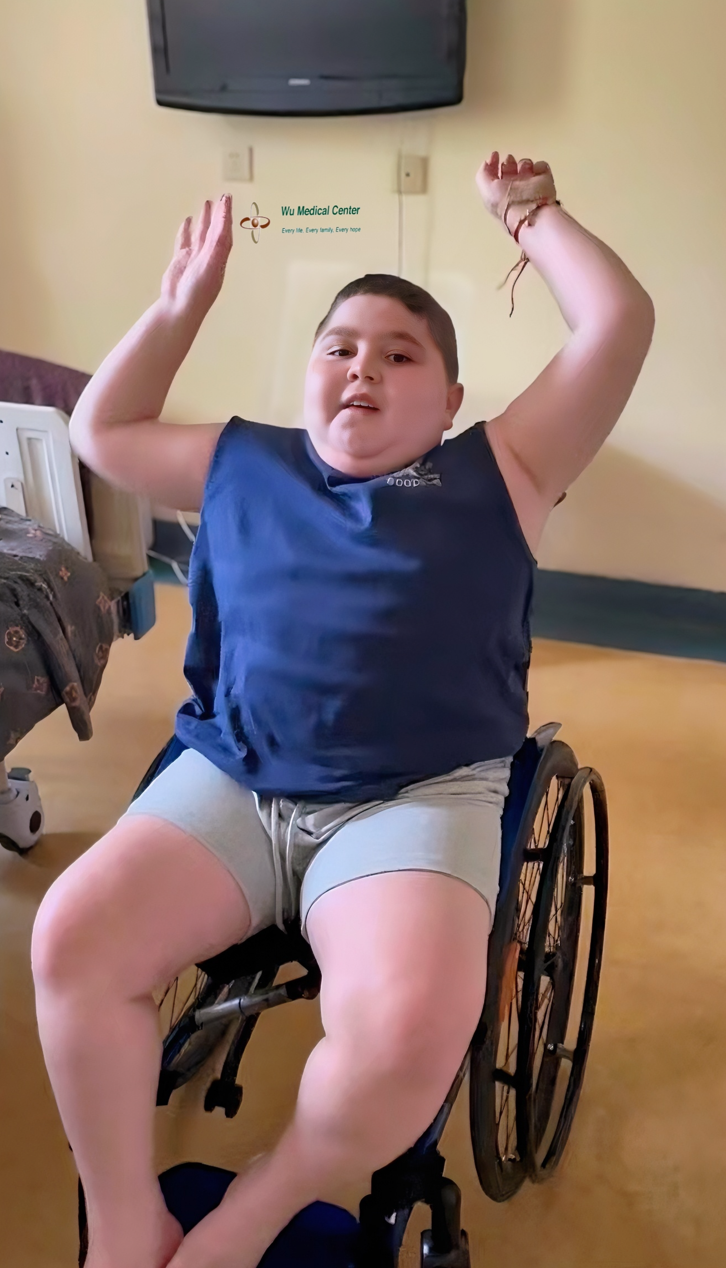
Peter Ricsei-Duchenne Muscular Dystrophy-(Hungarian)
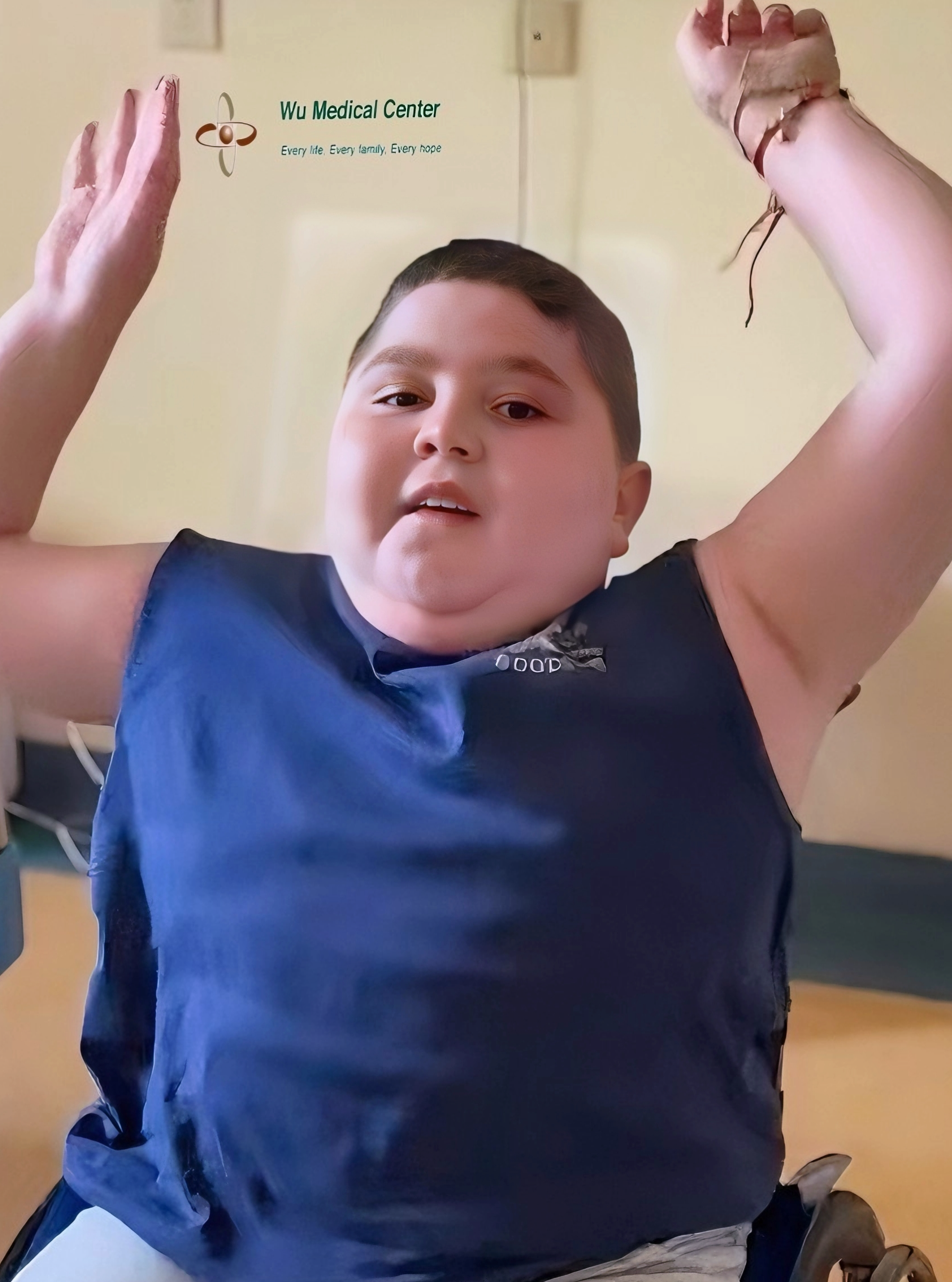 Patient Name: Peter Ricsei
Gender: Male
Age: 12 years old
Nationality: Hungarian
Diagnosis: Duchenne Muscular Dystrophy
Pre-treatment Condition:
The patient was admitted to hospital with a primary complaint of "progressive limb muscle weakness for 12 years" under the diagnosis of Duchenne Muscular Dystrophy. His main symptoms were as follows: progressive muscle weakness, inability to stand or walk, passive leg positioning, equinus ankylosis of the ankle joints (tendon contracture with no ankle joint mobility), difficulty sliding legs, inability to turn over or sit up independently, forward flexion of the head in passive sitting position, and impaired bilateral upper limb elevation. The patient had extreme hypersensitivity to pain in daily life, with no dysuria or dyschezia. He took 8 tablets of deflazacort per day for treatment.
Admission Physical Examination:
The patient’s blood pressure was 138/86 mmHg, heart rate ranges from 100 to 120 beats per minute, and respiratory rate was 22 breaths per minute. He was 140 cm in height and weight 63 kg. He presented with Cushingoid facies, moon face, buffalo hump and central obesity. No jaundice or petechiae were observed on the skin and mucous membranes. Bilateral lung breath sounds were slightly diminished, without rales or rhonchi. Heart sounds were slightly weak, accompanied by tachycardia and arrhythmia. The abdomen was flat and soft, with no palpable liver or spleen.
Neurological Examination:
The patient appeared anxious and tense in speech, had difficulty communicating with strangers and required his mother’s company. His memory and calculating ability were normal. Cranial nerve examination revealed no abnormalities. Muscle strength for neck rotation and shoulder shrugging was grade 3. Muscle strength of the shoulder girdle, pelvic girdle and limbs was decreased: proximal muscle strength of bilateral upper limbs was grade 2, distal muscle strength and grip strength of bilateral upper limbs were grade 2+; proximal and distal muscle strength of bilateral lower limbs was grade 1. He had difficulty lifting both arms, poor hand grip strength, and barely any movement of bilateral lower limbs. Muscle atrophy was not prominent, while pseudohypertrophy of gastrocnemius muscles was obvious. Both legs were flexed and could not be fully extended, bilateral feet showed slight varus deformity, and ankle joints presented equinus ankylosis. Limb muscle tension was basically normal. Limb tendon reflexes were diminished. Limb pathological signs were negative. The patient exhibited hypersensitivity to limb pain. Meningeal irritation signs were negative.
Treatment Process:
The patient was definitively diagnosed with Duchenne Muscular Dystrophy upon admission. He received combined comprehensive therapy consisting of CAST therapy and co-infusion of mesenchymal stem cells plus neural stem cells, alongside muscle fiber repair, muscular tissue nourishment, blood circulation improvement, immune regulation and rehabilitation training.
Post-treatment Outcome:
The patient’s motor function has improved, with elevated muscle strength and enhanced movement flexibility in both arms and hands: proximal bilateral upper arm muscle strength reaches grade 3+, bilateral forearm muscle strength and hand grip strength reach grade 3+. He can effortlessly lift his arms above the head with markedly accelerated lifting speed, grasp other people’s fingers with both hands and resist moderate resistance. Bilateral lower limb muscle strength improves to grade 2; both legs can support weight at two points, and he can independently control the swinging direction of his legs. Knee angular deformity is significantly alleviated with expanded range of motion of bone and joints, and preliminary ankle joint mobility is observed. His reliance on assistance for activities of daily living is reduced; he can slide his wheelchair independently and press elevator buttons by himself. Generalized hyperalgesia is greatly relieved. Cardiac function is enhanced; heart rate at rest and after activity is more stable compared with admission, with resting heart rate maintained at approximately 80 beats per minute. His mental state has markedly improved, anxiety and speech tension are greatly alleviated, he communicates with others more naturally and fluently, and smiles more frequently.